Can the Genetic Code Write Itself?
Homochirality
Protein Folding
Protein Binding
Functiional RNA
Genetic Coding
Every known symbolic code from intelligence—from human language and Morse code to computer software and engineered DNA data storage. Molecular biology likewise recognizes the genetic code as a genuine coding system, complete with stored instructions, transcription, translation, and molecular machinery that reads, interprets, and executes those instructions.
The question is not whether life contains a code—it does. The empirical question is whether a genetic information system is capable of writing itself.
Homochirality
Protein Folding
Protein Folding
Genetic Coding
Functiional RNA
Homochirality
Protein Folding
Protein Folding
Genetic Coding
Stage
1: Information
See the science
Life requires instructions that matter doesn't write
(toggle)
Life is not just matter.
Life is matter organized by information.
A living cell does not merely contain chemicals. It stores genetic instructions, copies them with remarkable accuracy, reads them when needed, and uses them to build and sustain itself. The same four DNA building blocks can produce countless different outcomes as biological function depends on their highly specified sequence.
DNA can copy existing information, but copying is not the same as writing. A book does not write its own text, and a dictionary does not explain the origin of language—it is itself written in the language it describes. Likewise, explaining DNA's molecules or its ability to replicate does not explain the origin of the information they contain.
What Genetic Information Requires
“The secret of life lies not in the chemicals themselves but in the logical and informational organization they embody.”
Paul Davies, The Fifth Miracle
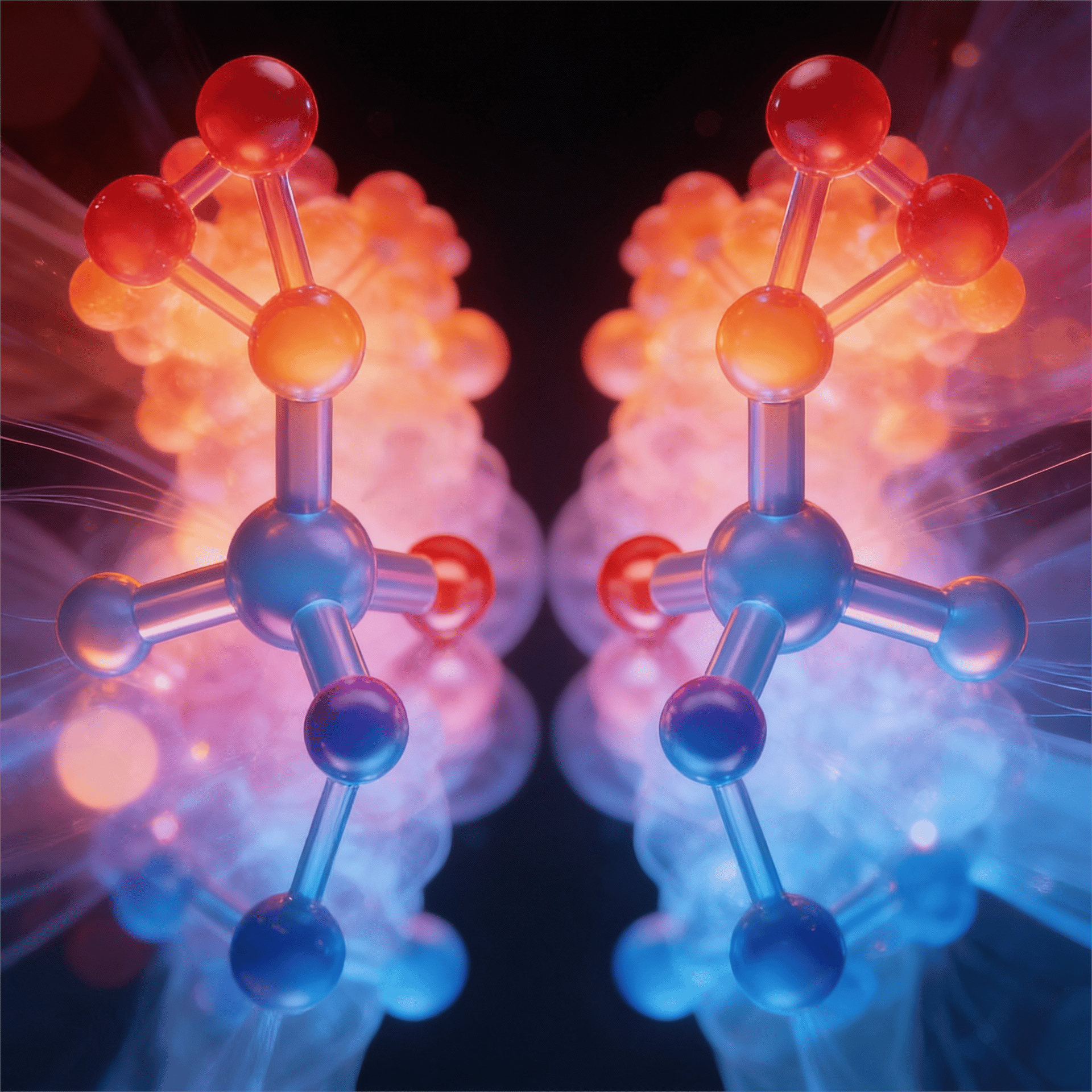
DNA stores genetic instructions
DNA's sequence is more than chemistry—it stores digital instructions for building proteins, regulating the cell, and passing those instructions to the next generation. Before anything can be copied or inherited, those instructions must already exist.
Function Depends on Meaningful Sequence
The same four nucleotides can produce virtually limitless sequences, but only an extraordinarily small fraction function as meaningful genetic instructions. Like letters in a language, sequence alone is not enough—it must convey information.
Instructions must be interpreted
DNA does nothing by itself. Cells must copy, read, and translate its instructions using specialized molecular machinery. Without an established system that interprets the code, the stored information cannot perform any biological function.
What science found
2. Transcription
See why
Life requires a code
A stored code cannot transcribe itself. Life depends on copying information before it can use it.
DNA's stored instructions cannot be used directly. Before proteins can be built, the cell must accurately copy selected genes into messenger RNA through a tightly regulated process called transcription. This requires molecular machines that recognize where to begin, copy the correct sequence, detect where to stop, and preserve the information with remarkable accuracy.
This requires an already existing transcription system capable of reading and copying the stored information.
What Genetic Transcription Requires
"The transfer of information from DNA to RNA is one of the most fundamental processes in biology."
— Robert H. Singer, Molecular Biology of the Gene
Transcription Requires Existing Machinery
During transcription, RNA polymerase copies DNA one nucleotide at a time while maintaining remarkably high fidelity. The process preserves existing information rather than generating new instructions. Without this coordinated machinery, stored information remains inaccessible.
DNA Must Be Recognized
RNA polymerase cannot begin copying DNA at random. It must first recognize specific promoter sequences that identify exactly where transcription begins. Without defined start signals, accurate copying cannot occur.
Information Must Be Copied Accurately
During transcription, RNA polymerase copies DNA one nucleotide at a time while maintaining remarkably high fidelity. The process preserves existing information rather than generating new instructions.
What science found

Unsubstantiated Objections
Close
3. Translation
See the science
A code is only useful if it can be interpreted
A copied code cannot translate itself. It requires an existing system that assigns meaning to its instructions.
Transcription copies DNA into messenger RNA, but that alone accomplishes nothing. The information must still be translated into proteins.
Every codon must be matched with the correct amino acid through an elaborate decoding system involving ribosomes, transfer RNA (tRNA), and aminoacyl-tRNA synthetases.
Translation is only possible if an established translation system already exists, yet that system itself can only be produced through translation.
What Genetic Transcription Requires
"The genetic code is translated rather than directly determined by chemical affinity."
,Francis Crick, The Origin of the Genetic Code
Translation Requires Existing Machinery
Messenger RNA cannot produce proteins by itself. Ribosomes, transfer RNA (tRNA), aminoacyl-tRNA synthetases, and numerous accessory proteins must already exist before genetic instructions can be translated. Without this coordinated machinery, copied information remains unread.
Codons Require Interpretation
A codon does not chemically determine its amino acid. The mapping is implemented by aminoacyl-tRNA synthetases, which attach the correct amino acid to each transfer RNA before translation begins.
Meaning is supplied by the translation system—not by chemistry alone.
Translation Preserves the Genetic Code
The translation machinery faithfully converts nucleotide sequences into amino acid sequences according to the established genetic code. Translation executes existing instructions—it does not create the code it follows.
What science found
4. Coordination
See the science
Life depends on coordinated systems—not isolated parts.
Genetic information, transcription, and translation are only part of the story.
Every living cell depends on thousands of molecular components working together in precisely coordinated ways.
DNA requires proteins to be copied and translated, while those proteins are themselves encoded by DNA and produced through those same processes.
A coordinated system requires its essential components to exist and function together.
What Genetic coordination requires
"Biological function arises from the coordinated interactions of many molecular components, not from isolated molecules."
Bruce Alberts, Molecular Biology of the Cell
Coordination Requires Order
Cellular processes must occur in the proper order, at the proper time, and in the proper location. Life depends on coordinated systems—not independent molecules.
Components Require Interdependence
DNA depends on proteins for replication, transcription, repair, and translation. Those proteins, in turn, are encoded by DNA. Each depends on the other to exist and function.
The System Must
Already Function
Information, transcription, translation, energy production, and regulation all rely on one another. Removing essential components causes the entire system to fail.
375px667px0º320px520px100%None0px0px0px0px80px48%Mixed16px
What science found
The genetic code
can't write itself
Life requires stored genetic instructions that direct every cellular process. Information can be stored and preserved, but it cannot explain the origin of the instructions it contains.
Jump to:
The genetic code
can't copy itself
Life requires genetic instructions to be copied before they can be used. Transcription faithfully copies existing information, but copying a code is not the same as writing one.
Jump to:
The genetic code
can't interpret itself
Life requires genetic instructions to be translated into proteins. Translation gives meaning to an existing code, but interpreting a code is not the same as creating it.
Jump to:
The genetic code
can't organize itself
Life requires information, transcription, translation, and countless molecular systems to function together. Coordination allows the system to operate, but coordinating a system is not the same as originating one.
Jump to:
Like every other form of code containing information, transcription, translation, decoding and coordination, it originates from a mind. The code cannot write itself.
What the above empirically demonstrates...